
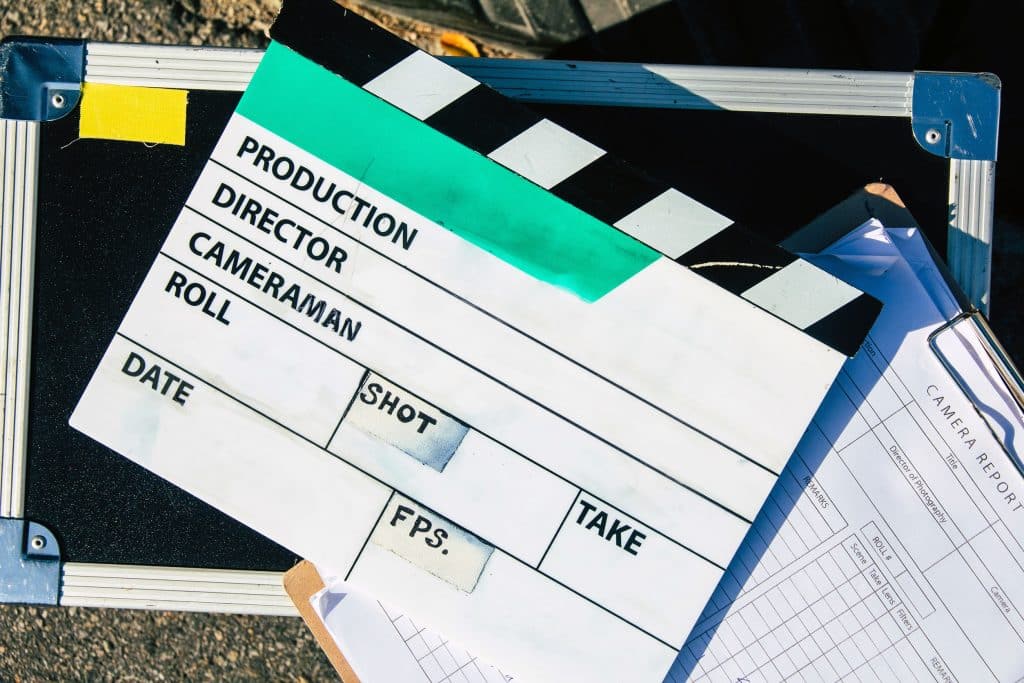
Filming in Spain involves coordinating international teams with local professionals, managing schedules that comply with Spanish labour laws, and adapting to a territory that offers both Mediterranean beaches and desert landscapes in a single working day. In this context, daily call sheets become the backbone of any audiovisual production that lands in the country. This is not just another administrative document: it is the tool that ensures that every member of the team knows exactly where they need to be, at what time, and what they need to bring with them. For foreign production companies working in Spain for the first time, understanding how these documents work makes the difference between a smooth day of filming and logistical chaos.
What is a call sheet in film production?
A film call sheet is the daily working document that each member of the crew receives before a day of shooting. It serves as a detailed roadmap specifying arrival times, exact locations, scenes to be shot, technical requirements, and everything else needed to ensure that production runs like clockwork. Internationally, the format of film call sheets may vary slightly depending on the traditions of each country, but their function remains the same: to eliminate uncertainty.
In Spain, this document has its own characteristics derived from local labour legislation, working hours established by collective agreements, and the geographical particularities of the country. A Spanish call sheet must take into account aspects such as distances between locations, mandatory rest periods according to labour regulations, and the time slots in which certain filming permits are valid. For production companies accustomed to working in other European or American markets, these particularities require specific attention. Understanding what a film production in Spain entails also means understanding how these documents operate within the local legal and logistical framework.
Essential elements of a call sheet in Spain
An effective production call sheet in Spain must include several key components that ensure the day runs smoothly. Although the basic structure complies with international standards, certain elements take on special relevance when working in Spain:
- Daily shooting schedule and timings: Hour-by-hour breakdown of the day, including calls for technical crew, actors and specific departments. In Spain, it is essential to clearly specify mandatory rest periods and meal breaks, which are regulated by collective agreement.
- Crew calls and working hours: Call times for each department, in accordance with established working hours. Spanish law establishes clear limits on consecutive working hours and minimum breaks between working days.
- Transport and logistics: Detailed information on meeting points, access routes and transport options. Given Spain’s geography and the distances between cities, this section requires particular precision.
- Shooting locations: Full addresses with GPS coordinates, information on municipal permits and specific characteristics of each location. In Spain, many local councils require specific documentation to be available on set.
- Cast and main crew: List of actors and department heads with their individual call times. For international productions, both local and international contact details are included.
- Department notes and instructions: Specific instructions for each department regarding technical requirements, last-minute changes or special requirements for the day.
- Emergency contacts: Contact numbers for production, Spanish emergency medical services (112), nearby hospitals and security managers. This section must include contacts that work with the Spanish telephone system.
- Weather forecast and local conditions: Specific weather forecast for the filming location and local conditions that may affect the work (local holidays, events that generate traffic, temporary access restrictions).
Each of these elements must be presented clearly and accessibly, bearing in mind that professionals of different nationalities will be working on a Spanish set and will need to understand the information quickly.
How call sheets are used during a shooting day
The call sheet is not a static document that is consulted once and then filed away. Throughout the day, it becomes a constant reference for resolving queries, checking schedules, and coordinating movements between departments. Its effectiveness depends both on the quality of the information it contains and how it is used on the ground.
Role of the assistant director in Spain
In Spain, the role of the assistant director in relation to call sheets for daily operations goes beyond simply preparing the document. This professional acts as a bridge between the creative vision of the director and the operational reality of the set, ensuring that the planned schedules comply with Spanish labour legislation and actual working conditions.
The Spanish assistant director is familiar with the applicable collective agreements, mandatory rest periods and the particularities of working with local technical teams. Knowing how to draw up a production schedule for film in Spain means understanding these local variables. For international productions, having an assistant director who is well versed in these aspects is essential to avoid labour disputes or regulatory breaches that could bring filming to a standstill.
Communication between international and Spanish crews
When teams from different countries work together, the film production call sheet must function as a common language that transcends language barriers. In Spain, the usual practice in international productions is to produce bilingual documents that present key information in both English and Spanish.
This duality goes beyond simple translation. It involves adapting concepts, schedules and technical terminology so that both teams work with the same information. A term such as ‘magic hour’ must be translated taking into account that in Spain ‘hora mágica’ is commonly used, but also ‘hora dorada’, and the document must specify the exact time according to the latitude of the Spanish location where filming takes place.
Health, safety, and local regulations
Safety on set is non-negotiable, and call sheets for daily operations must reflect the specific safety protocols for Spain. This includes references to occupational risk prevention regulations, which in Spain establish specific requirements for coordinating business activities when Spanish and international companies work together.
The document must clearly specify who the safety coordinator is, where first aid kits and emergency equipment are located, and what the specific protocols are depending on the type of shoot. In natural Spanish locations, especially during the summer months, specific precautions regarding the risk of forest fires and restrictions on access to certain protected areas are included. This attention to detail is part of the organisation of a professional film set.
How call sheets connect with film production workflow in Spain
Call sheets for daily operations do not exist in isolation within the production process. They form part of a broader documentary ecosystem that includes the film pre-production schedule and the tracking of filmed material. Understanding these connections helps international production companies to integrate their working systems with Spanish practices.
Tracking shooting progress from call sheet to dailies
The relationship between what is planned in the call sheet and what is actually filmed is reflected in the daily production reports and the visual material generated. In Spain, local production managers often work with systems that directly link the information in the call sheet with budget tracking and filming time control.
This monitoring is particularly relevant for productions that access Spanish tax incentives or subsidies, as public bodies require detailed documentation on compliance with shooting plans. The daily call sheet provides the documentary basis on which to build these monitoring reports, connecting the initial planning with the actual results. This process is part of the film post-production schedule, where the information recorded during shooting feeds into the next phases of the project.
Best practices for international productions
Working in Spain with international teams requires adapting standard production call sheet practices to local particularities. These are the fundamental considerations that make the difference between a production that flows smoothly and one that encounters constant obstacles:
- Adapting to Spanish labour laws and shooting calendars: Spanish labour legislation establishes maximum working hours, mandatory breaks and specific conditions for night work that must be reflected in each call sheet for daily operations. In addition, the Spanish calendar includes national and regional holidays that affect crew availability, municipal permits, and production costs.
- Using bilingual call sheets for international crews: Preparing documents that work in both English and Spanish is not a luxury but an operational necessity. Critical information about safety, schedules, and locations must be understandable to all team members without the need for simultaneous interpretation.
- Collaborating with Spanish production service companies: Spanish companies specialising in production services are familiar with the call sheet formats that work best with local technical crews and can advise on the best way to structure the information. Their experience in previous international shoots provides proven solutions to common communication and coordination problems.
These practices do not represent additional complications but rather logical adaptations to a mature audiovisual market with its own dynamics and regulations. Production companies that invest time in understanding these particularities before starting filming reap clear benefits in terms of efficiency and conflict reduction.
How Spain Film Commission helps international crews with call sheets
Navigating the intricacies of daily call sheets is easier with the right support. Spain Film Commission connects international production companies with specialised Spanish professionals who are familiar with both international standards and local practices, facilitating the transition between the two working systems.
The advice includes aspects such as recommending assistant directors with experience in international productions or reviewing documentation to ensure compliance with Spanish labour regulations. This support also extends to coordinating with local authorities for filming permits, an aspect that has a direct impact on the information that must be included in each daily call sheet.
For production companies planning a film production in Spain, having this local knowledge from the initial stages allows them to design film production call sheets that anticipate particularities rather than encountering them as obstacles during filming. The experience accumulated in hundreds of international productions translates into practical solutions that optimise daily operations on set.