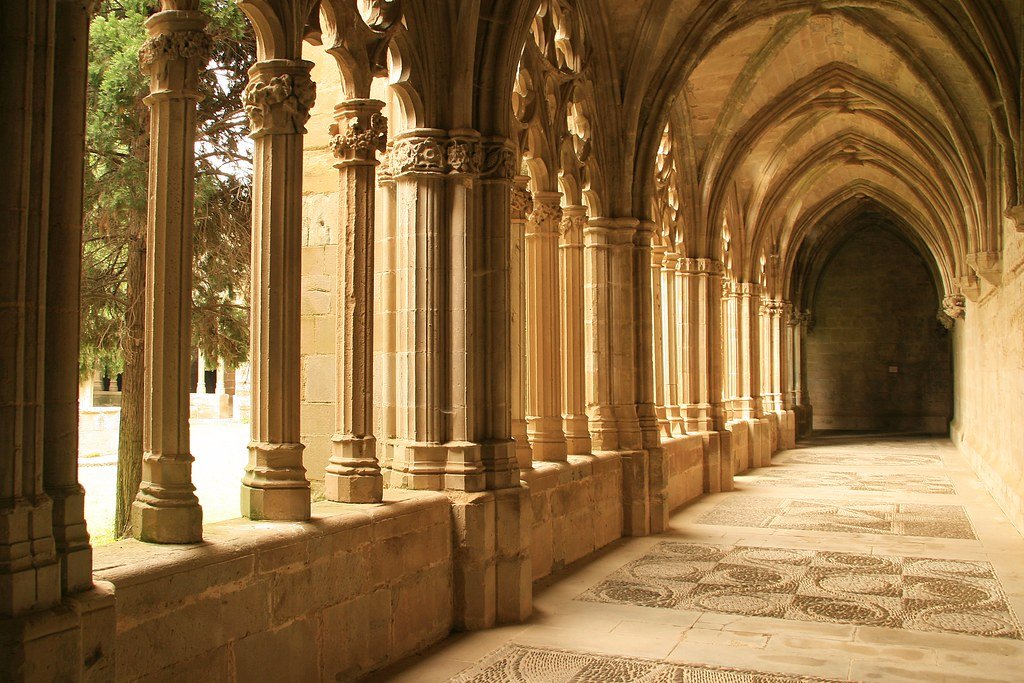
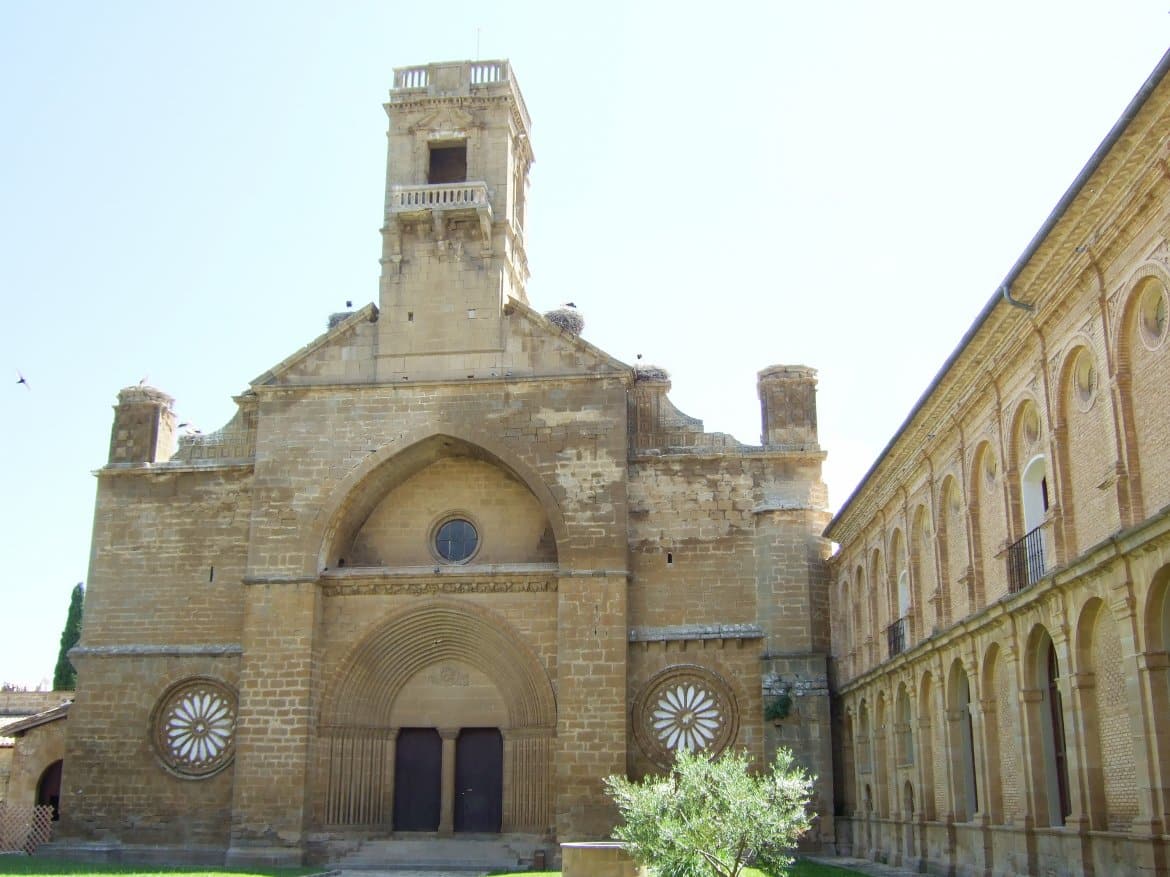
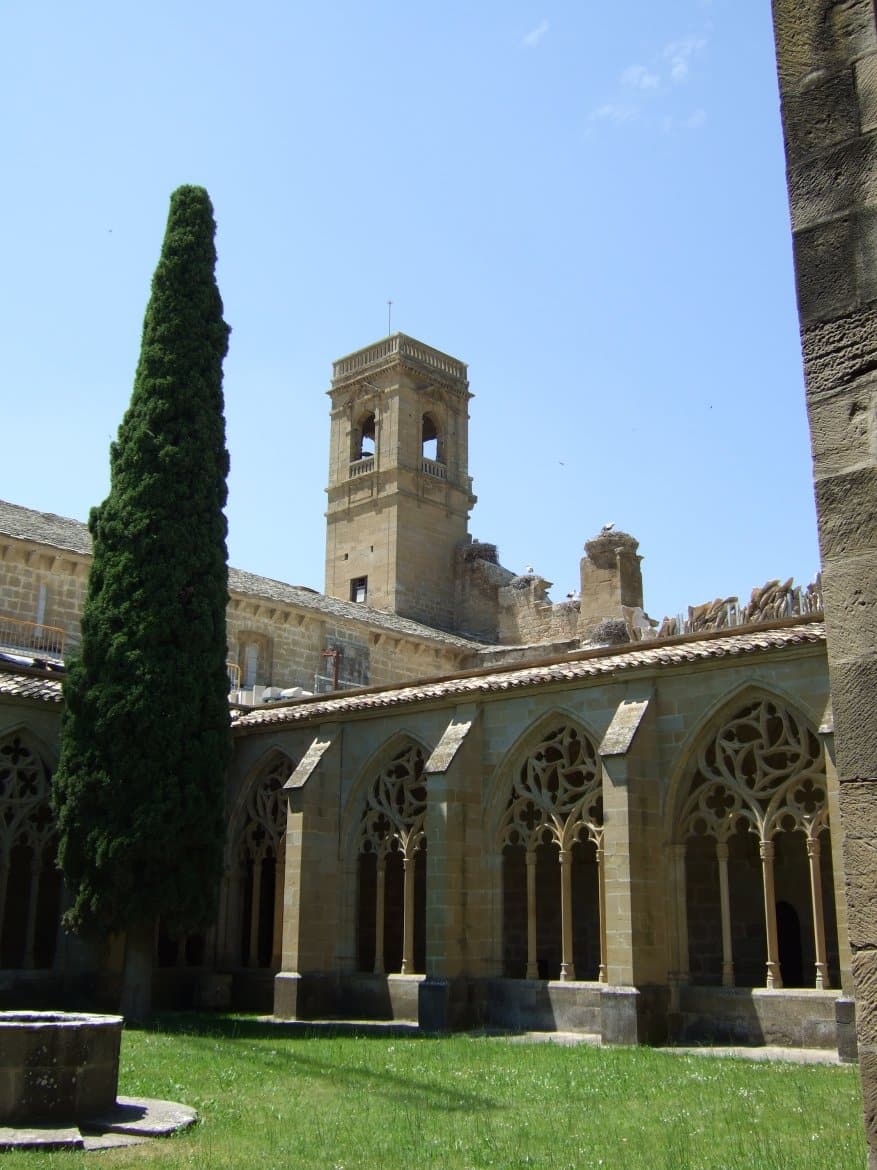
Two kilometres from Carcastillo, on the banks of the river Aragon and in the middle of an esplanade with hardly any vegetation, stands the complex of medieval buildings that make up the Cistercian monastery of La Oliva. Its name owes much to legend, as according to popular tradition a Navarrese king was mortally wounded while fighting the Arabs and went to die at the foot of a wild olive tree. The huge church, which is one of the truest examples of Cistercian art in Spain, the Gothic cloister, the capitular hall and the chapel of San Jesucristo reveal the great artistic importance of this monastery, built in the twelfth and thirteenth centuries.