Spain is the country with the greatest biodiversity in Europe, and this natural wealth translates into an extraordinary catalogue of locations for international audiovisual productions: volcanic landscapes, deserts, Atlantic forests, wetlands, high-altitude mountain ranges, rugged coastlines. The visual appeal is beyond doubt. What is not always clear in advance is that filming in Spain’s protected natural areas involves its own authorisation process, different from filming on public roads or at heritage sites, with longer deadlines and stricter conditions. This article explains how the system works, who manages the permits depending on the type of area and what an international production needs to know before setting foot on location for the first time.
Understanding Spain’s Protected Natural Areas: Types and Classifications
The legal framework governing protected natural areas in Spain is Law 42/2007 of 13 December on Natural Heritage and Biodiversity, which establishes five basic categories of protection at national level:
- National and Natural Parks: areas of special ecological, aesthetic, educational and scientific value. Spain currently has 16 national parks and more than one hundred natural parks managed by the autonomous communities.
- Nature Reserves: areas of high biological fragility where resource exploitation is highly restricted. They are the environments with the highest level of restrictions for external activities.
- Natural Monuments: unique formations or specific elements of nature (monumental trees, geological formations and palaeontological sites) that deserve specific protection.
- Protected Landscapes: areas with natural, aesthetic and cultural values that are to be preserved while maintaining traditional practices.
- Marine Protected Areas: areas of the marine environment with ecosystems of particular rarity or uniqueness.
The national categories are complemented by the “Red Natura 2000″, the European network of protected areas which in Spain includes “Zonas de Especial Conservación”, ZEC (Special Areas of Conservation) and “Zonas de Especial Protección para las aves”, ZEPA (Special Protection Areas for Birds). The “Red Natura 2000” covers approximately 28% of Spain’s land territory and, in many cases, overlaps with national or regional protection categories, which can make identifying the competent authority for authorising a shoot more complex.
It should also be taken into account that the autonomous communities have powers in the field of nature conservation and have developed their own legislation, bringing the total number of designations for protected areas to more than forty throughout the country. To choose the Spanish region that is most suitable for your shoot, taking into account the variety of natural environments available, Spain Film Commission can guide you through the process.
Who manages filming permits in protected areas
There is no single point of contact or single authority for applying for a filming permit in national parks (kw national park filming permit). Management depends on the type of area and its ownership.
National Parks
Spain’s 16 national parks are governed by Law 30/2014 of 3 December on National Parks. Although the central government has powers over the National Parks Network through the Autonomous National Parks Agency (OAPN), the day-to-day management of each park is delegated to the autonomous community where it is located. This means that to film in Doñana National Park, you must contact the Government of Andalusia; for Teide, the Government of the Canary Islands; for Picos de Europa, which spans three autonomous communities, contact is divided between Asturias, Cantabria and Castile and León. In all cases, the application is processed through the relevant regional environmental authority.
Natural Parks and Regional Reserves
Los parques naturales y las reservas naturales son de competencia exclusivamente autonómica. La solicitud de permiso medioambiental para producción cinematográfica se dirige a la consejería de medioambiente o de medio natural de la comunidad autónoma donde se ubica el espacio. Cada CCAA tiene sus propios formularios, requisitos y plazos, lo que hace imprescindible identificar el organismo correcto antes de iniciar cualquier gestión.
Regional film commissions are a very useful first point of contact in this process, as they are familiar with local procedures and can facilitate the initial steps. You can see how film commissions work in Spain to understand the role they play in the permitting process.
Natura 2000 Sites
Filming in an area included in the Red Natura 2000 does not necessarily involve a separate authorisation process, as these areas often overlap with national or regional protection categories and are managed within the same framework. However, European regulations require any activity that could affect the conservation values of a Natura 2000 site to be assessed in advance. In practice, this may result in the requirement for a simplified environmental impact assessment or a compatibility report, particularly when the production involves the installation of heavy equipment, vehicle access or filming during periods of particular sensitivity for wildlife.
The Permit Process for Filming in Natural Parks
How to Identify the Right Authority for Your Location
The first step is to determine which category of protected area the location falls under. A search in the protected areas viewer of the Ministry for the Ecological Transition or a consultation with the relevant regional film commission will usually resolve this issue quickly. Spain Film Commission can help you identify the correct point of contact for each area from the beginning of the process, avoiding wasted time dealing with the wrong authority. To understand the general filming permit process in Spain, we recommend consulting our complete guide to filming permits in Spain.
Typical Documentation and Requirements
The documentation required varies depending on the area and autonomous community, but the most common elements in an application for authorisation for location scouting and filming in Spain (kw film location scout Spain) in protected environments are as follows:
- Project description: type of production, plot or purpose, production company and tax identification number.
- Detailed shooting schedule: dates, times, specific areas of the site where filming is intended to take place, number of crew members.
- List of planned technical equipment, specifying machinery, vehicles and lighting systems
- Preliminary assessment of the impact on the environment: activities to be carried out, surfaces to be occupied and how the footprint will be minimised.
- Site restoration plan following filming.
- Public liability insurance policy with coverage appropriate to the value of the site.
- In some cases, a bond or financial guarantee covering potential damage to the environment.
Timelines
Deadlines for protected natural areas are generally the longest in the entire filming permit process in Spain. While a standard municipal permit can be processed in around 15 working days, authorisation to film in a natural park or nature reserve usually takes between 30 and 60 days. In national parks, particularly those with greater ecological sensitivity or higher tourist numbers, the timeframe may be longer. The practical recommendation is to begin the process at least eight weeks in advance, and up to three months if the project involves large crews, access with special vehicles or filming in restricted-access areas. Integrating this variable into the pre-production schedule from the outset is essential; you can consult our article on how to manage pre-production in Spain to see how to incorporate these deadlines into the overall workflow.
Fees and Guarantees
The costs associated with filming permits in protected natural areas vary considerably depending on the area, the autonomous community and the scale of the production. In general terms, an administrative fee for processing the application should be taken into account and, in many cases, a fee for use of the area, which may be calculated per filming day, according to the number of crew members or the surface area occupied. Some natural parks also require the provision of a bond or security deposit to cover potential damage to the environment, which is returned following the post-shoot inspection. It is advisable to request specific information about fees from the managing authority when beginning the application process, as these may vary from one year to another.
Seasonal Restrictions and Environmental Conditions to Factor In
One of the most critical aspects of filming in protected natural environments is seasonality. Natural areas have biological cycles that determine access and permitted activities at different times of the year, and these cycles are not negotiable:
- Nesting season: spring and early summer are periods of particular sensitivity for birdlife. Many protected areas restrict or prohibit access to certain zones during the breeding season of birds of prey or other protected species, which may directly affect specific locations.
- Fire risk: during summer, the risk of forest fires affects access to woodland areas. During periods of maximum alert, access restrictions may be activated that affect filming even when a permit has been granted. The use of pyrotechnics, high-temperature lighting or other risk elements may be prohibited during the summer months.
- Peak tourist season: many national and natural parks have daily visitor quotas during the busiest months. The production will have to coordinate its filming with the management of these quotas, which may involve restrictions on the available times or areas.
- Weather conditions: in mountainous areas, access routes may be closed due to snow or extreme conditions during the winter months. In wetlands or marshlands, periods of rain may make certain areas inaccessible to vehicles.
In general terms, late spring (May–June) and autumn (September–October) tend to combine good weather conditions with lower tourist numbers and a lower fire risk, although it is always necessary to verify the specific conditions of each area.
Spain’s Natural Parks That Have Been Used in Film and TV Productions
The history of productions filmed in Spain’s natural areas is extensive and encompasses very different genres. Some of the most frequently used locations are the following.
The Tabernas Desert (Almería), the only true desert in Europe, has a film tradition dating back to the 1960s with Sergio Leone’s spaghetti westerns—The Good, the Bad and the Ugly, A Fistful of Dollars—and extending to recent science-fiction and action productions. Game of Thrones also used the Tabernas area to represent the Dothraki lands in its sixth season.
The Bardenas Reales in Navarra, a 42,500-hectare natural park featuring a semi-desert landscape eroded by wind and water, became an internationally recognised filming location when Game of Thrones used it to represent the Dothraki Sea in several scenes from the sixth season featuring Daenerys and the Dothraki horde.
Teide National Park (Tenerife) has served as a setting for productions seeking extraterrestrial or science-fiction landscapes. Clash of the Titans (2010) used Teide together with other locations in the Canary Islands, including the Maspalomas dunes and Timanfaya National Park in Lanzarote. Fast & Furious 6 also filmed sequences in Tenerife, taking advantage of its volcanic landscapes.
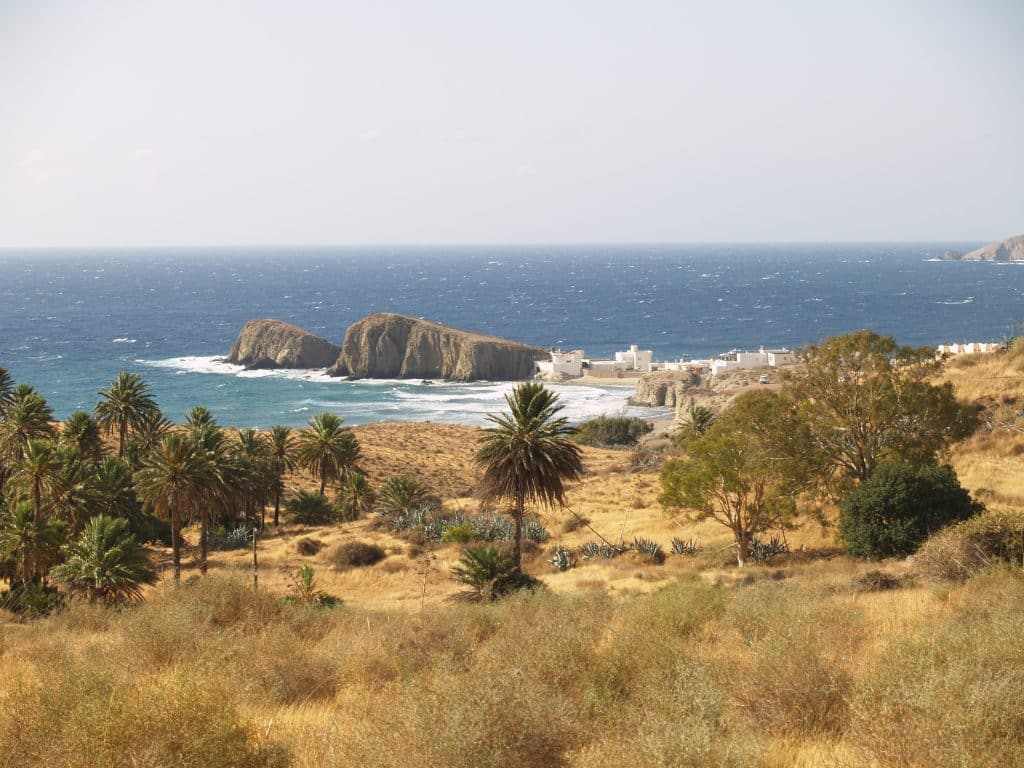
Cabo de Gata-Níjar Natural Park (Almería) has appeared in numerous productions, including scenes from Indiana Jones and the Last Crusade filmed at Mónsul Beach. The park combines unspoilt coastline, cliffs, dunes and semi-arid vegetation.
The Pyrenees, on the Aragonese, Catalan and Navarrese sides, have hosted productions requiring authentic alpine landscapes. Ordesa and Monte Perdido National Park and the Aran Valley area have served as settings for productions requiring high-altitude mountains with dense forests and waterways.
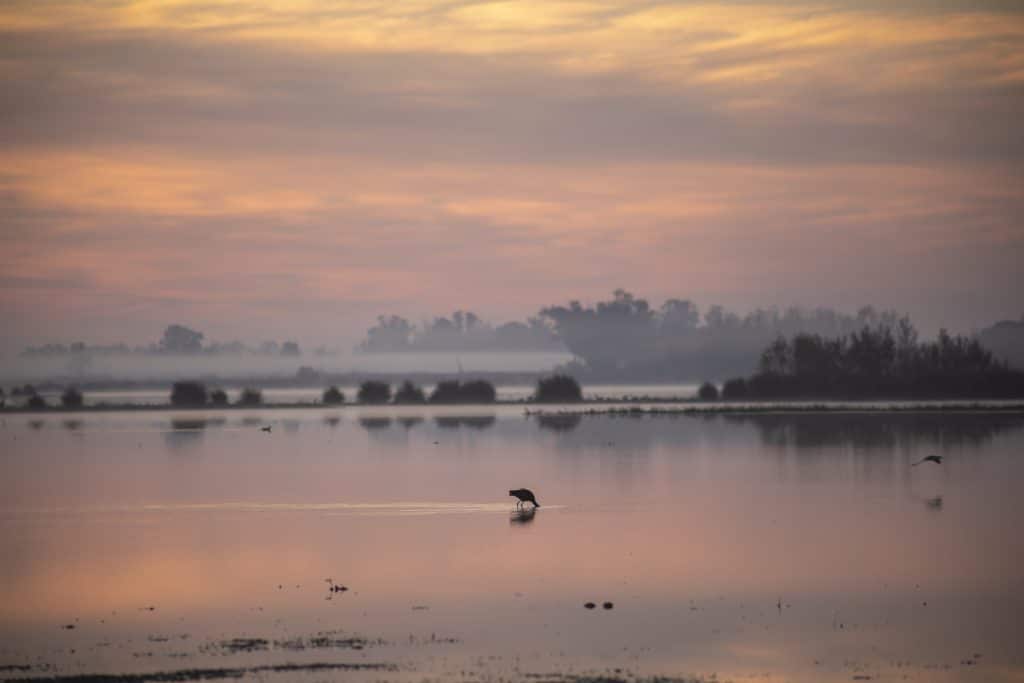
Doñana National Park (Huelva and Seville), one of Europe’s most important wetlands, has been used in major nature documentaries and fiction productions requiring marshlands and ecosystems with highly distinctive visual qualities.
Practical Considerations for Production Teams
Working with Local Film Commissions and Regional Contacts
Regional film commissions are the most efficient ally for any production wanting to film in a protected natural area. They know the local procedures, have direct relationships with the authorities managing the areas and can anticipate potential difficulties before they become problems. In some cases, they have databases of locations within protected areas and can advise on which areas have previously been used for filming, simplifying the assessment process. The production process in Spain explained on our blog gives you a complete overview of the role these organisations play in the production as a whole.
Location Scouting in Protected Areas
Film location scouting in Spain in protected natural areas often requires prior authorisation even during the reconnaissance phase. It is not uncommon for access to certain areas of the park to be restricted and for scouting to have to be carried out accompanied by a site technician or through an accredited local service company. Planning the scout sufficiently far in advance and formally notifying the managing authority is good practice and also builds trust ahead of the application for filming authorisation. Spain Film Commission has a location scouting tool in Spain that can guide you through this process.
Minimum Footprint and Environmental Compliance
The minimum-footprint principle is the working philosophy required by the authorities managing protected natural areas for any filming activity. In practice, this means arriving at the site with only the equipment strictly necessary, restricting access to authorised areas, leaving no waste in the environment, not altering vegetation or soil beyond what is essential, and restoring any temporary modifications at the end of filming. Sustainable film production in Spain is not only an ethical requirement: in protected areas, it is a legal requirement. Spain Film Commission actively works to promote responsible filming practices; you can consult our section on green shooting in Spain to learn about the criteria and resources available for making an environmentally responsible production.
Need Guidance on Filming in a Protected Area?
The authorisation process for filming in a protected natural area in Spain can be complex if approached without prior knowledge of the system: autonomous communities with different powers, managing authorities with their own procedures, longer-than-usual deadlines and conditions that vary depending on the time of year and the sensitivity of the environment. Spain Film Commission can accompany your production through this process: from identifying the area and the competent authority to preparing the documentation and following up on the application
If your production has locations in protected natural areas on its radar, the sooner the process begins, the better. Contact us and tell us what type of environment you want to film in: we will find a way to make it viable.