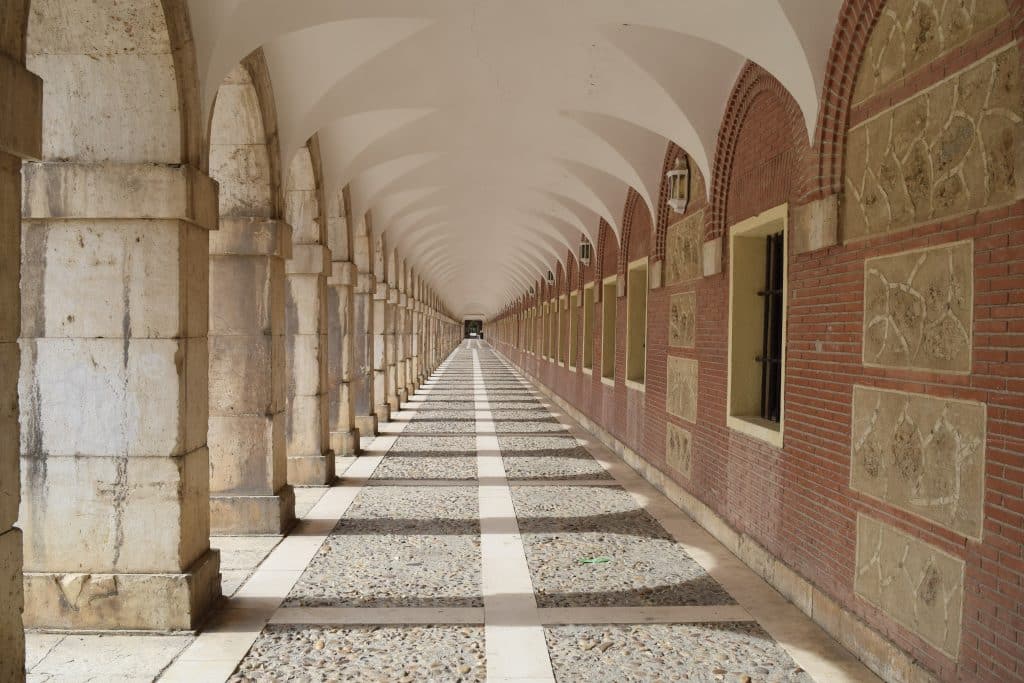
Spanish historical heritage is one of the country’s major attractions for international productions. Medieval castles, Gothic cathedrals, archaeological sites and historic city centres listed as World Heritage Sites offer a range of locations that is difficult to match anywhere else in Europe. However, filming at heritage sites involves navigating a specific regulatory framework that differs from filming in conventional public spaces, with its own timelines and conditions that should be understood before planning begins.
This article summarises the essentials: what the law protects, who manages each type of heritage asset, what is required to obtain filming permission and what restrictions should be anticipated on set.
What counts as a heritage site in Spain
Spain has one of Europe’s most comprehensive legal frameworks for heritage protection. Understanding how the system is structured is the first step towards knowing who to contact and which permits and procedures are required.
Categories of protected heritage in Spain
The main national reference is Law 16/1985 of 25 June on Spanish Historical Heritage, which establishes different levels of protection. The highest level of protection is granted to Assets of Cultural Interest (Bienes de Interés Cultural, or BIC). This category includes immovable and movable assets requiring special protection because of their historical, artistic, archaeological, ethnographic, scientific or technical value.
For immovable BICs, national legislation establishes the following main categories:
- Monument: A building, engineering structure or monumental sculpture of historical, artistic, scientific or social interest considered individually.
- Historic Site: A group of buildings forming a representative settlement unit that reflects the evolution of a human community. Historic centres such as those of Toledo, Salamanca and Cáceres fall within this category.
- Historic Garden: A defined area of designed landscape with aesthetic, botanical or historical value, such as the gardens of the Royal Palace of Aranjuez.
- Historic Site: A place or landscape associated with events or traditions of historical, ethnological or anthropological significance.
- Archaeological Site: An area containing movable or immovable assets that may be studied using archaeological methods, such as Atapuerca or Mérida.
Who Manages Heritage Sites in Spain
This is where much of the complexity of the system lies: heritage management in Spain is decentralised. The central government has jurisdiction over assets belonging to the General State Administration and those forming part of National Heritage. However, Spain’s autonomous communities have their own powers in the field of cultural heritage and have developed additional legislation that may qualify or extend the protection established at national level. Cataluña, Andalucía El País Vasco, Comunidad Valenciana and Galicia, among others, have their own heritage legislation and management bodies.
In addition, many heritage assets are privately owned — including churches, foundations, religious institutions and aristocratic families. In these cases, it is necessary to negotiate directly with the owner as well as obtaining any relevant administrative authorisations. In practice, a single location may require permits from the local and regional authorities as well as permission from the private owner of the property.
The Permit Process for Filming in Heritage Sites
The authorisation process for filming at historic locations in Spain (historic filming locations Spain) overlaps with the general filming permit process, but adds specific requirements and additional layers of approval.
For a complete overview of the general filming permit process, see our article on filming permits in Spain.
Who to Contact and Where to Start
The starting point depends on the ownership and category of the heritage asset. As a general rule:
- For state-owned assets (national museums, National Heritage sites and state archives), the application should be submitted to the relevant managing authority.
- For assets managed by autonomous communities, the appropriate point of contact is the regional government department responsible for culture or heritage in the autonomous community where the site is located.
- For municipally owned assets, the relevant contact is the local council, usually through its culture department or local film office, if one exists.
- For privately owned or ecclesiastical assets, a direct agreement with the owner or institution is required, independently of any administrative permits.
Spain Film Commission can assist international productions in identifying the appropriate contact for each location and facilitating initial communication with the relevant managing institutions, significantly reducing the time required to get the process underway.
Documentation and Requirements Typically Requested
Documentation varies depending on the managing authority, but the most common requirements in the filming permits for historic buildings process include:
- A detailed description of the project and the purpose of the shoot (fiction, documentary, advertising, etc.).
- A shooting schedule including dates, times, scenes and crew size.
- A list of technical equipment and details of how it will be anchored or supported, particularly for cranes, dollies and lighting equipment.
- A site protection plan detailing which surfaces will be covered and the measures that will be taken to prevent damage to the heritage asset.
- Public liability insurance with coverage appropriate to the value of the property.
- n some cases, a visual treatment or references illustrating the production’s aesthetic approach.
Timelines and Planning Ahead
Timelines are one of the most critical aspects of audiovisual production in heritage environments. While a standard municipal filming permit may be processed in around 15 working days, authorisation to film at a protected heritage site will often require between 30 and 45 days. For World Heritage Sites or particularly sensitive heritage assets, the process may take 60 days or longer.
As a practical recommendation, it is advisable to begin the process at least 6 to 8 weeks before the planned filming date.
To integrate this planning into the pre-production workflow, see our article on how to manage pre-production in Spain.
Restrictions and Conditions Commonly Applied to Heritage Shoots
Filming permission for a heritage asset almost always comes with specific conditions. Understanding these requirements in advance makes it possible to design a realistic shooting plan and avoid unexpected problems on set.
Physical Restrictions on Equipment and Crew
Physical restrictions are among the most common requirements in cultural heritage film production. In general, productions should anticipate the following limitations:
- Equipment such as tripods, cranes and track systems may not be anchored directly to historic floors, walls or surfaces without prior protection.
- Limits may be imposed on the maximum number of people allowed in certain areas, particularly inside fragile buildings or archaeological sites.
- Heavy vehicles may be restricted or prohibited inside the site or in its immediate surroundings.
- Modifying or intervening in the space — for example, moving historic furniture or altering existing features — is generally prohibited without express authorisation.
Lighting and Electrical Restrictions
The use of lighting equipment in heritage environments requires careful technical planning. High-powered lights generate heat that can damage paintings, frescoes, wood and historic textiles. The electrical systems in many historic buildings are also not designed to handle the demands of an audiovisual production.
In practice, this often means using external generators instead of connecting to the building’s electrical network, choosing low-heat LED lighting and obtaining prior technical approval for the equipment to be used.
Scheduling Restrictions: Opening Hours, Seasons and Public Access
Most heritage sites continue to operate as public attractions, which limits the hours available for filming. It is common for filming authorisations to specify particular time windows — before opening to the public, after closing or on weekly closure days — and productions may need to coordinate their activities with tourist visits at certain times of day.
Some locations also have seasonal restrictions linked to events or periods of particularly high visitor numbers.
Restrictions in UNESCO World Heritage Sites
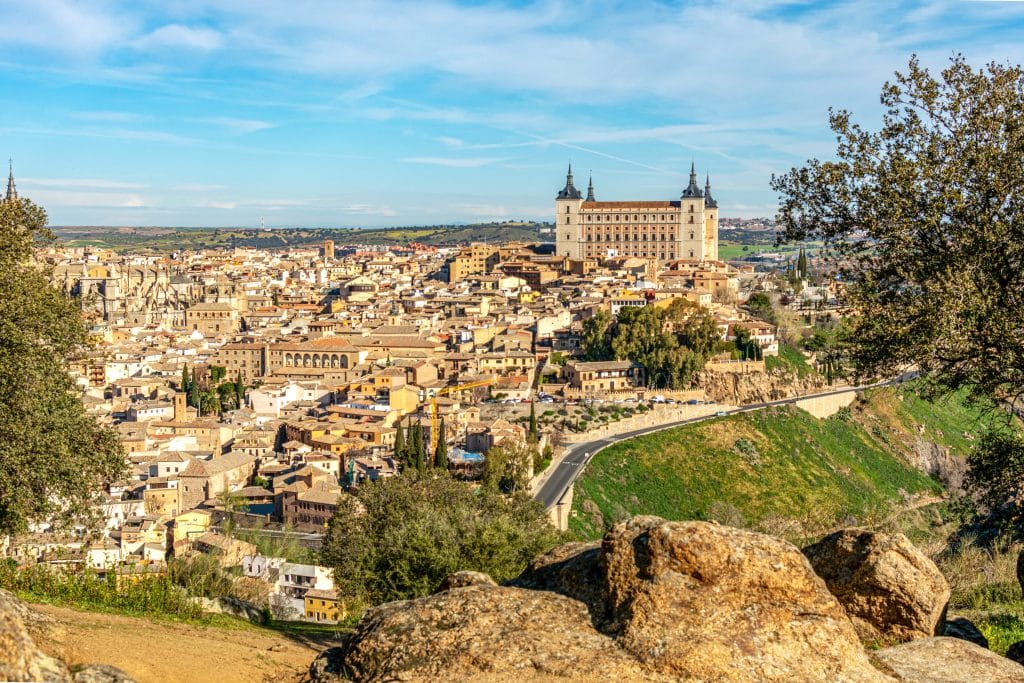
Spain currently has 50 sites inscribed on the UNESCO World Heritage List, including the Alhambra, the historic centre of Toledo, the Old City of Salamanca, the Way of Saint James and the works of Gaudí in Barcelona.
Filming at these locations requires specific authorisation beyond a standard municipal filming permit, and processing times are generally among the longest in the system. Management typically involves both the relevant regional heritage authority and the organisation responsible for managing the site, which in many cases has its own protocol for assessing filming requests.
Preservation Responsibilities During the Shoot
Obtaining filming permission is not the end of the process: it also involves assuming a series of responsibilities during and after the shoot.
Ground and Surface Protection
The production is responsible for protecting historic surfaces before installing any equipment. In practice, this may involve using floor protection systems such as protective blankets, industrial carpets or wooden boards, protecting mouldings and decorative elements, and installing physical barriers to separate crew traffic from the most sensitive areas of the site.
The production designer or location coordinator should photographically document the condition of the space before filming begins.
Obligaciones de inspección y restauración posteriores a la actividad de rodaje
Once filming has concluded, the production must leave the site in the same condition in which it was found. Many managing institutions require a joint inspection at the end of the shoot, and public liability insurance should cover restoration costs in the event of accidental damage.
Any damage, however minor, should be reported immediately to the person responsible for the heritage asset and handled in accordance with the institution’s established restoration procedures.
Working with a heritage liaison or site coordinator
For larger-scale shoots at heritage sites, the managing institution may require — or recommend — the presence of a heritage coordinator or liaison throughout the filming day.
This person acts as the link between the production and the institution, monitors compliance with the conditions of the filming authorisation and can intervene if any activity poses a risk to the integrity of the heritage asset.
Their presence should not be seen as an obstacle, but as a safeguard. They know the site, can answer questions about restricted areas and help facilitate communication with the venue’s staff.
Practical Considerations by Type of Heritage Space
Each type of heritage site has its own particular characteristics. Below are some practical considerations for the main categories.
Castles, palaces and monumental buildings
Publicly owned castles and palaces generally have more structured filming protocols and management teams accustomed to working with productions.
Ownership varies widely — from the State and National Heritage to autonomous communities, local councils, private foundations and individuals — and access conditions and fees can differ significantly from one location to another.
Properties managed by National Heritage, such as the Royal Palace of Madrid, El Escorial and the Alcázar of Segovia, have their own application procedures and location fees.
Religious buildings: cathedrals, monasteries and churches
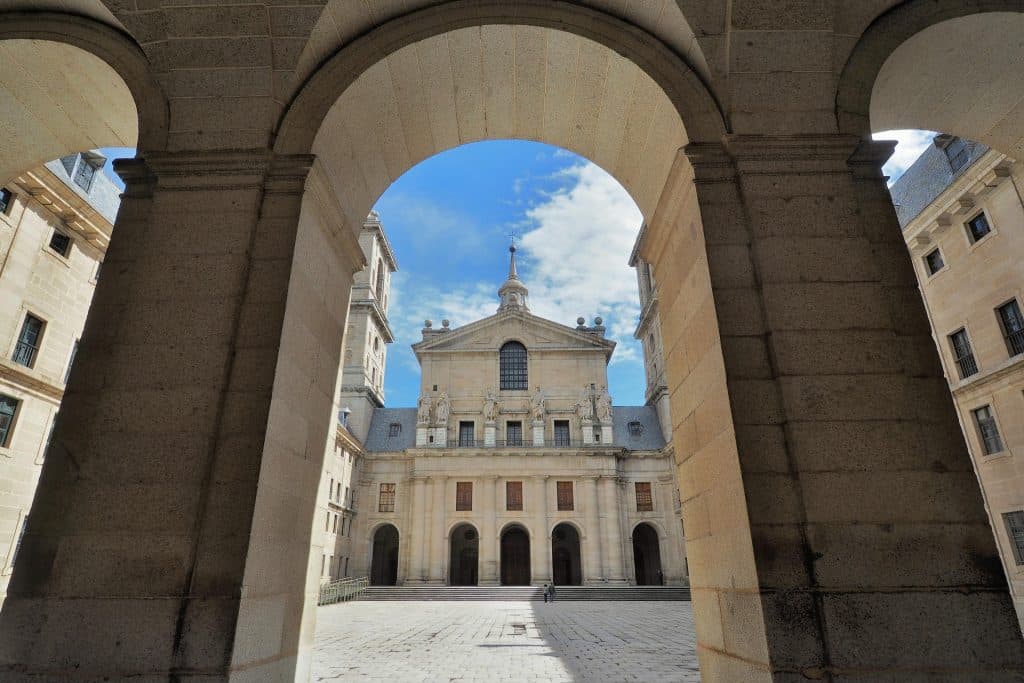
Most cathedrals, monasteries and churches in Spain are owned by the Catholic Church, meaning that the main point of contact for securing use of the space is the relevant religious institution — such as a diocese, religious order or parish — rather than solely the public administration.
In addition to permission from the owner, authorisation from the relevant heritage authority may also be required, particularly when the building is designated as a BIC.
Many of these buildings continue to follow an active liturgical calendar, which can affect the dates and times available for filming.
Archaeological Sites and Ruins
Archaeological sites are among the most sensitive locations and frequently impose the strictest filming restrictions. Access for heavy equipment, ground anchoring and crew movement may be severely restricted or completely prohibited in certain areas.
At active archaeological sites where excavation work is still taking place, coordination with the archaeological team is essential.
Archaeological sites designated as BICs are under the direct supervision of the relevant autonomous community’s heritage authority.
Historic City Centres and Protected Urban Areas
Historic urban areas — including historic centres designated as BICs — combine municipal management of public spaces with heritage protection covering the area as a whole.
Filming in a city’s historic centre will generally require municipal permits for occupying public space and, depending on the activities planned, may also require approval from the relevant regional heritage authority.
The level of restriction varies considerably from one city to another. Some have dedicated film offices with clearly defined procedures, while in smaller municipalities the process may be more case-specific.
How Spain Film Commission Can Help Navigate the Process
The complexity of the system — with responsibilities divided between the State, autonomous communities, local councils and private owners — makes the authorisation process one of the most demanding aspects of filming in heritage environments.
Spain Film Commission can support international productions at several stages of the process, including identifying the competent managing authority for each location, providing guidance on specific documentation requirements, facilitating initial contact with institutions and following up on filming authorisation requests.
If your production plans to include historic filming locations in Spain (historic filming locations Spain) in its shooting schedule, the earlier the process begins, the more time there will be to resolve unexpected issues and adapt the schedule to actual processing times.
Contact us to receive guidance tailored to the specific needs of your project.